Do Shepherd’s Huts Need Planning Permission?
It’s probably one of the questions we’re asked most often:
“Do I need planning permission for a shepherd’s hut?”
The good news is, not always…
Whether you need planning permission for a shepherd’s hut in Scotland depends largely on where you're putting it, what you're using it for and how the land is being used.
If you're putting a shepherd’s hut in the garden of your home and using it for something connected with the house, perhaps a home office, art or craft studio, hobby room, garden retreat, gym, playroom or other space for the enjoyment of your home, you may not need planning permission at all.
If you're planning to use a shepherd’s hut as a holiday let, short-term let or separate residential accommodation, or you're looking to put a hut on a piece of land away from your home, planning is much more likely to come into the equation.
But even then, don't let the word planning immediately put you off.
Small-scale, sensitively designed rural tourism and visitor accommodation can fit very well with Scottish planning policy, particularly where it supports the local economy and is appropriate to its surroundings. In fact, Scotland's National Planning Framework 4 specifically includes a policy supporting proposals for huts where their nature and scale are compatible with the surrounding area.
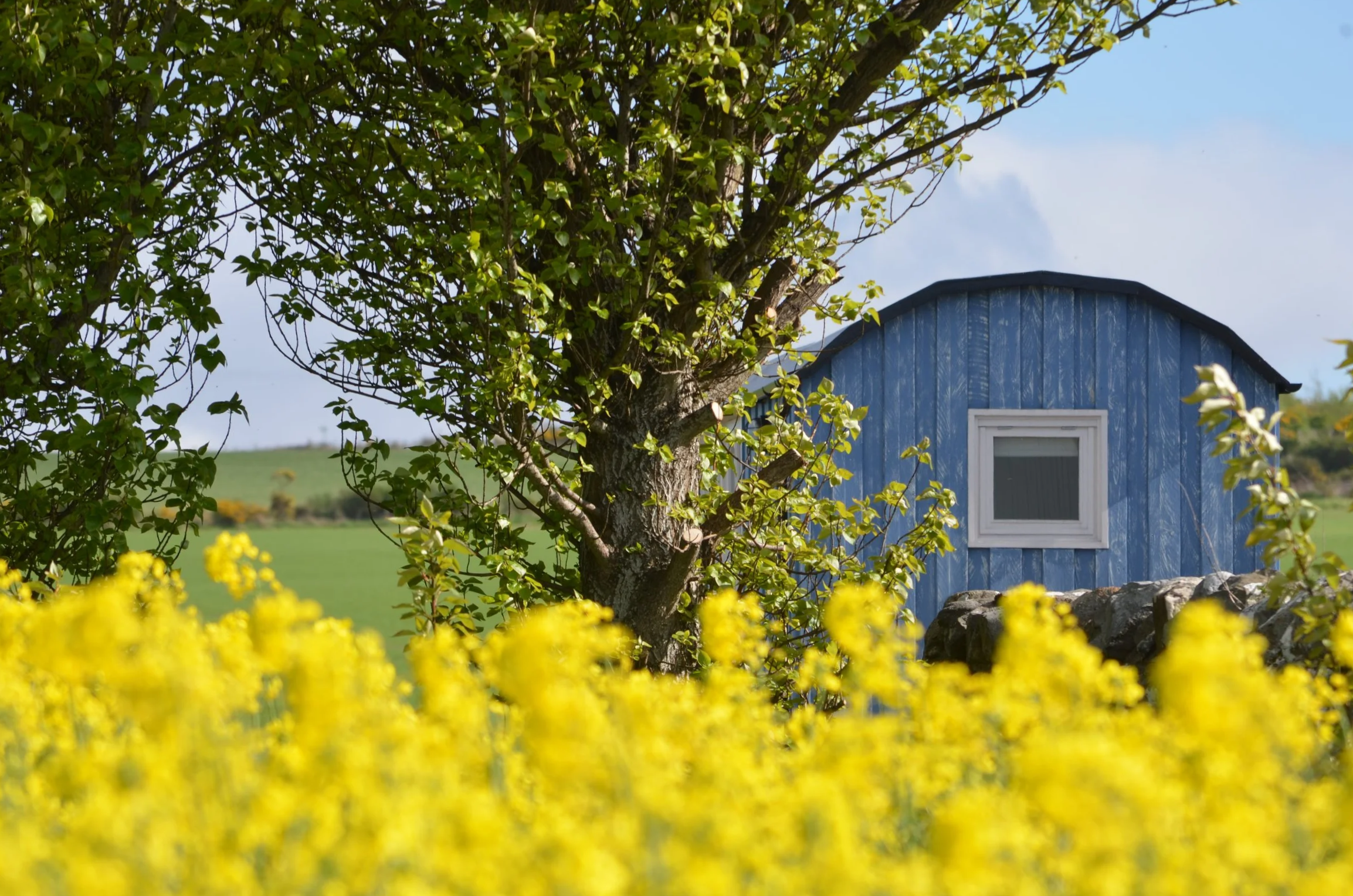
Could a Shepherds Hut add another income stream to your farm or croft business?
And sometimes the planning issue isn't actually the shepherd’s hut itself. It can be the change of use of the land.
So, as with most things planning related, there isn't one simple yes or no answer.
We're shepherd’s hut builders, not planning consultants, so this certainly isn't intended as professional planning advice. But after years of building huts and helping customers through the process, we can hopefully make the basics a little less confusing.
When might a shepherd’s hut NOT need planning permission?
For a lot of people reading this, this is probably the bit you came for!
If your shepherd’s hut is going within the domestic curtilage of your home, essentially the garden or land belonging to and used with your house, there are circumstances where permitted development rights can allow an ancillary building to be provided without making a planning application.
In Scotland, householder permitted development rights cover certain buildings that are incidental to the enjoyment of the dwellinghouse. Typical examples include sheds, garages, sun houses and garden buildings. There are limits and conditions around things such as the building's height, position and the amount of curtilage that remains undeveloped.
That can potentially make a shepherd’s hut in your garden a great option for things such as:
- A home office
- An art, craft or writing studio
- A hobby room
- A garden retreat
- A home gym or yoga space
- A playroom or family room
- Additional space for your household
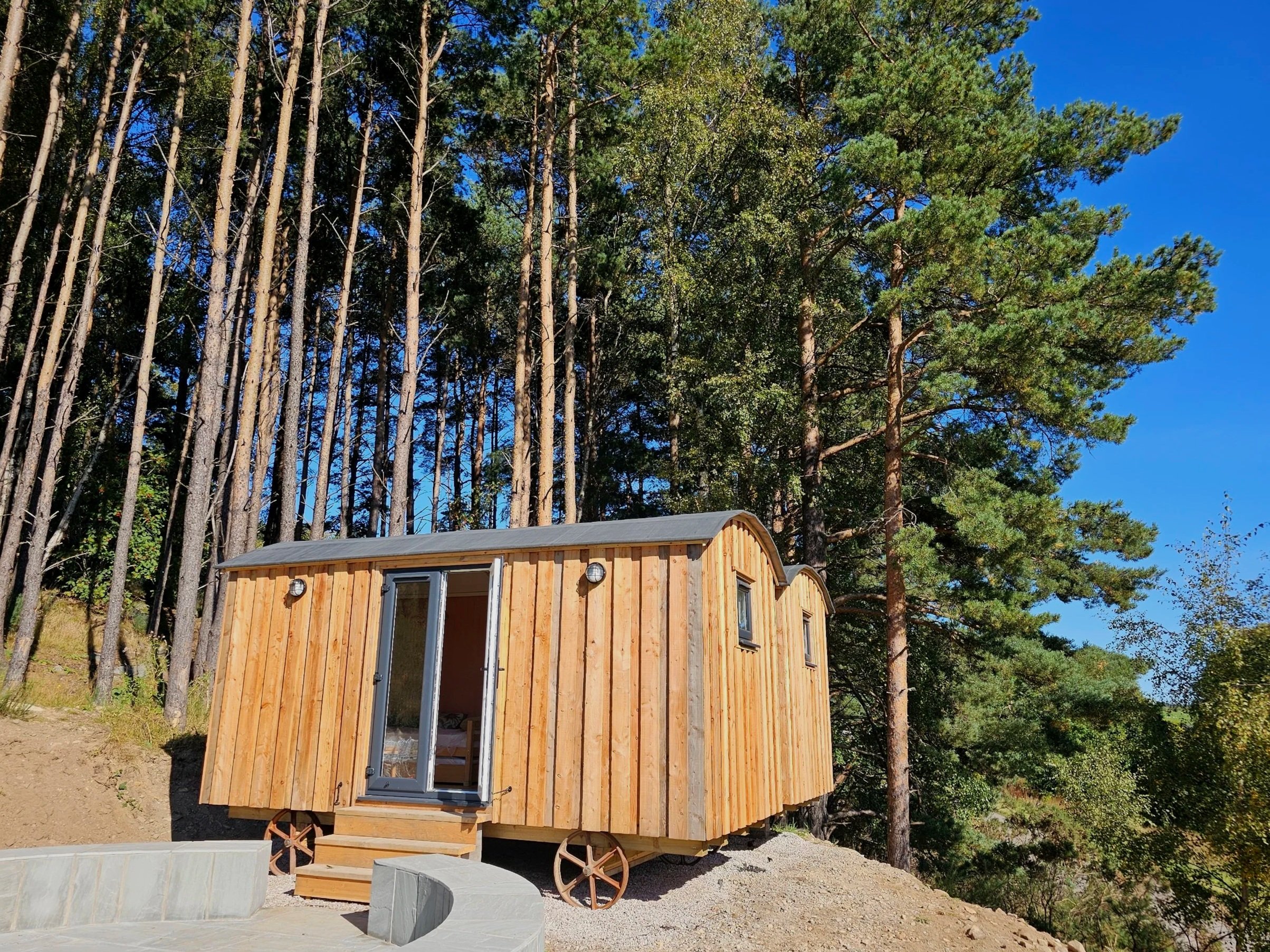
A Shepherd’s Duet, this double hut was designed as additional space for the enjoyment of the home, falling under permitted development rights.
This is one of the things we love about shepherd’s huts. You can create a genuinely useful extra room without necessarily building a conventional extension or permanent garden building.
So if you're searching for “do I need planning permission for a shepherd’s hut in my garden?”, the answer is that you may not, depending on the proposed use, location and the relevant permitted development rights.
What about sleeping accommodation?
This is where we'd recommend a little more caution.
Using a hut as occasional space for family and guests can be very different from creating a completely separate dwelling. However, sleeping accommodation and self-contained facilities can make the planning position a little more complicated, so it's worth explaining exactly how you intend to use the hut to your local planning authority and getting their view on it.
The important thing is generally how the hut is actually being used, as well as what it contains.
And because every property is different, and there can be additional restrictions around things such as listed buildings, conservation areas and particular planning conditions, we'd always recommend checking with your local planning authority rather than relying on a general rule you found online.
Including this one!
Permanent living in a shepherd’s hut is a different situation again and may require planning permission, depending on the circumstances and the land involved.
But it's on wheels… surely that means I don't need planning?
Ah, the famous “it's on wheels, so it doesn't need planning” rule.
Unfortunately, it's not quite that simple.
A genuine shepherd’s hut is a movable structure rather than a conventional permanent building, and that can certainly be relevant to how it's considered.
But having wheels isn't a magic planning exemption.
Planning rules don't just control buildings. They also control the use of land, and permanent works associated with your hut can have planning implications too.
So while the movable nature of a shepherd’s hut can be important, we'd be very wary of anyone giving you a blanket “it's got wheels, you definitely don't need planning” answer.
You might genuinely not need permission, but it should be because your particular siting and use don't require it, not simply because your hut has a lovely set of cast-iron wheels underneath it.
What if I want a shepherd’s hut holiday let?
This is where planning permission for a shepherd’s hut holiday let is much more likely to be required.
If you're putting a new shepherd’s hut on land specifically to create holiday accommodation, visitor accommodation or a short-term let, the planning authority will usually be interested in both the hut itself and how the land is going to be used.
Highland Council's current guidance states that a new building or structure placed on land for use as a short-term let will usually require planning permission, including stand-alone units such as pods and cabins.
So if you're considering a shepherd’s hut holiday let in Scotland, it's worth talking to your local planning authority early.
But needing planning permission doesn't mean you're starting with a big red cross against your idea.
In fact, there is quite a lot within Scottish planning policy that can support the right sort of small-scale tourism development.
Small-scale rural tourism can be a really good fit
Scotland's National Planning Framework 4 (NPF4) has a positive policy approach towards tourism.
Policy 30 says tourism-related development should take into account things including its contribution to the local economy, compatibility with the surrounding area, impacts on communities, sustainable travel, accessibility, carbon emissions and opportunities to access the natural environment.
Importantly for us, NPF4 also specifically says that proposals for huts will be supported where the nature and scale of the development is compatible with the surrounding area and the proposal complies with relevant good-practice guidance.
Now, that obviously doesn't translate to:
“Put a shepherd’s hut anywhere you fancy and the planners will love it.”
Every application is assessed individually.
But a single shepherd’s hut, or a small number of huts, sensitively positioned within a rural site can be a very different proposition from a large holiday park or conventional development.
We've found that planners in some areas can look favourably on well-considered, small-scale tourism proposals, particularly where they support an existing rural business, farm or croft, bring visitors and spending into the local economy, and have been designed to sit sympathetically within the landscape.
It's about creating something that belongs in the place, rather than simply squeezing as many accommodation units as possible onto a piece of land.
Sometimes it's the land that needs planning, not just the hut
This is a really useful distinction to understand, particularly if you're considering putting a shepherd’s hut on agricultural land or another rural site.
Sometimes the question isn't:
“Does my shepherd’s hut need planning permission?”
It's:
“Do I need permission to use this land for something different?”
Planning legislation also covers a material change in the use of land. Highland Council's current guidance also explains that development includes a material change of use of land or buildings, even where there are no physical changes.
Imagine you have a piece of agricultural or other rural land and you place a movable shepherd’s hut on it to operate as holiday accommodation.
The planning issue may be the fact that part of that land is now being used for tourism or visitor accommodation, rather than simply whether you've constructed a new permanent building.
So the planning application may be concerned with the change of use and siting of the hut, rather than treating your proposal in exactly the same way as somebody building a conventional holiday cottage.
It's still planning permission. We're not suggesting there's a special “easy planning” category for shepherd’s huts. But understanding what you're actually applying for can make the whole thing feel a lot less mysterious.
Does an off-grid shepherd’s hut make a difference?
It can, but off-grid doesn't automatically mean planning-exempt.
This is an area where shepherd’s huts can have some real advantages.
A genuinely off-grid shepherd’s hut can potentially be installed with very little permanent infrastructure or disturbance to the land.
Depending on the individual project, that might mean:
- no permanent foundations;
- solar rather than a mains electricity connection;
- no mains water connection;
- minimal groundworks;
- little alteration to the surrounding land; and
- independent, appropriately designed waste or sanitation systems.
That can help demonstrate the small-scale, low-impact and potentially reversible nature of a proposal.
If the use of the land has materially changed, however, you may still need planning permission even if the hut is completely off-grid.
And this is another area where it's worth looking at the whole project rather than just the hut.
A shepherd’s hut sitting quietly in a field with minimal groundworks is one thing. Creating a new road, large parking area, substantial decking, permanent drainage works, landscaping and other infrastructure alongside it can introduce additional planning considerations.
Being off-grid isn't a loophole.
But it can be part of a really strong low-impact approach to rural accommodation.
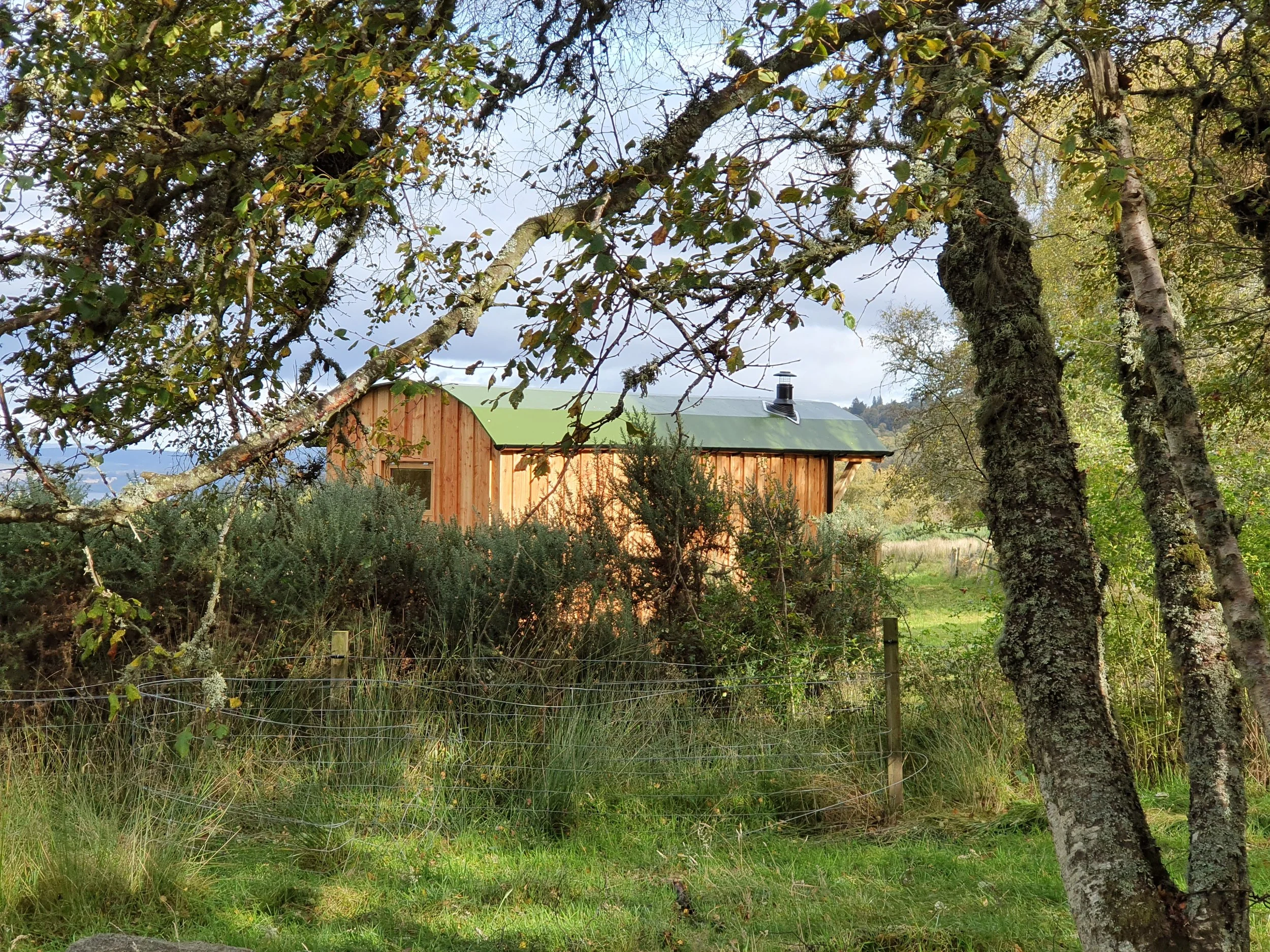
What about a small off-grid hut in the woods?
This is where things get particularly interesting.
Scotland has a specific planning policy approach to recreational huts, recognising small, low-impact buildings that are used intermittently for recreation. The Scottish definition of a hut includes accommodation of no more than 30m² internal floor area, generally using low-impact materials, without mains water, electricity or sewerage, and capable of being removed with little or no trace.
So if you're imagining a little off-grid hut tucked away in woodland, rather than a permanent home or conventional holiday accommodation, there is a specific Scottish planning framework worth knowing about.
It doesn't mean that every off-grid hut automatically avoids planning permission. Being off-grid, being on wheels or being small isn't, by itself, a planning exemption. However, Scotland's National Planning Framework 4 specifically supports proposals for huts where their nature and scale are compatible with their surroundings and relevant good-practice guidance.
That's quite an important distinction. A small recreational hut is a recognised type of development within Scottish planning policy, rather than something that simply falls outside the planning system.
You may also come across references to 1000 Huts when researching Scottish hutting. Despite how it might sound, this isn't a law giving the first 1,000 huts permission to be built without planning. It's part of the wider Scottish hutting movement that helped promote and develop the planning approach for recreational huts.
So if you're dreaming of a simple, low-impact hut in the woods, it's certainly worth looking into the Scottish hutting policy before assuming that planning will automatically be an uphill battle
What about living permanently in a shepherd’s hut?
Permanent residential use is another matter again.
If you're intending to use a shepherd’s hut as somebody's main home, the council will consider the residential use of the land as well as the accommodation itself.
There are circumstances involving farms, crofts and rural businesses where different policies and considerations may apply, but these are very site-specific.
So if your ultimate plan is to live permanently in a shepherd’s hut, we'd strongly recommend getting planning advice on your particular land rather than buying a hut on the assumption that you'll automatically be allowed to live in it.
Planning isn't the only thing to think about
If you're creating commercial visitor accommodation or a shepherd’s hut holiday let, there can be a few other boxes to tick too.
In Scotland, Short-Term Let licensing is separate from planning permission. Current Scottish Government guidance specifically includes unconventional accommodation such as shepherd’s huts, pods and yurts within the short-term-let licensing regime.
Depending on your project, you may also need to think about:
- drainage and wastewater;
- private water supplies;
- vehicle access and parking;
- building standards where applicable;
- environmental or landscape constraints;
- caravan site licensing; and
- any requirements specific to your local authority.
That sounds like quite a list written down!
In reality, not every requirement will apply to every project. A single small off-grid hut is obviously a very different development from a site containing ten holiday units, a reception building, roads and parking.
It's another reason we always recommend talking to the council about your actual proposal, rather than getting too worried about every regulation you come across online.
So, should planning put you off buying a shepherd’s hut?
Absolutely not!
If you want a shepherd’s hut in your garden as an office, studio, hobby space, garden retreat or other space connected with the enjoyment of your home, you may find that you don't need to make a planning application at all!
And if you're considering a shepherd’s hut holiday let, rural tourism business or visitor accommodation and planning permission is required, that's not necessarily bad news either.
A well-designed shepherd’s hut can offer a relatively small-scale way of creating visitor accommodation without the impact of a large conventional building.
Think about the wider story behind your proposal.
Could it support an existing farm or croft? Bring visitors to an area where they'll spend money with other local businesses? Make use of natural materials? Operate off-grid? Require very little permanent infrastructure? Allow people to experience a beautiful rural location without dominating it?
Those things can all help demonstrate why a development is appropriate for its location.
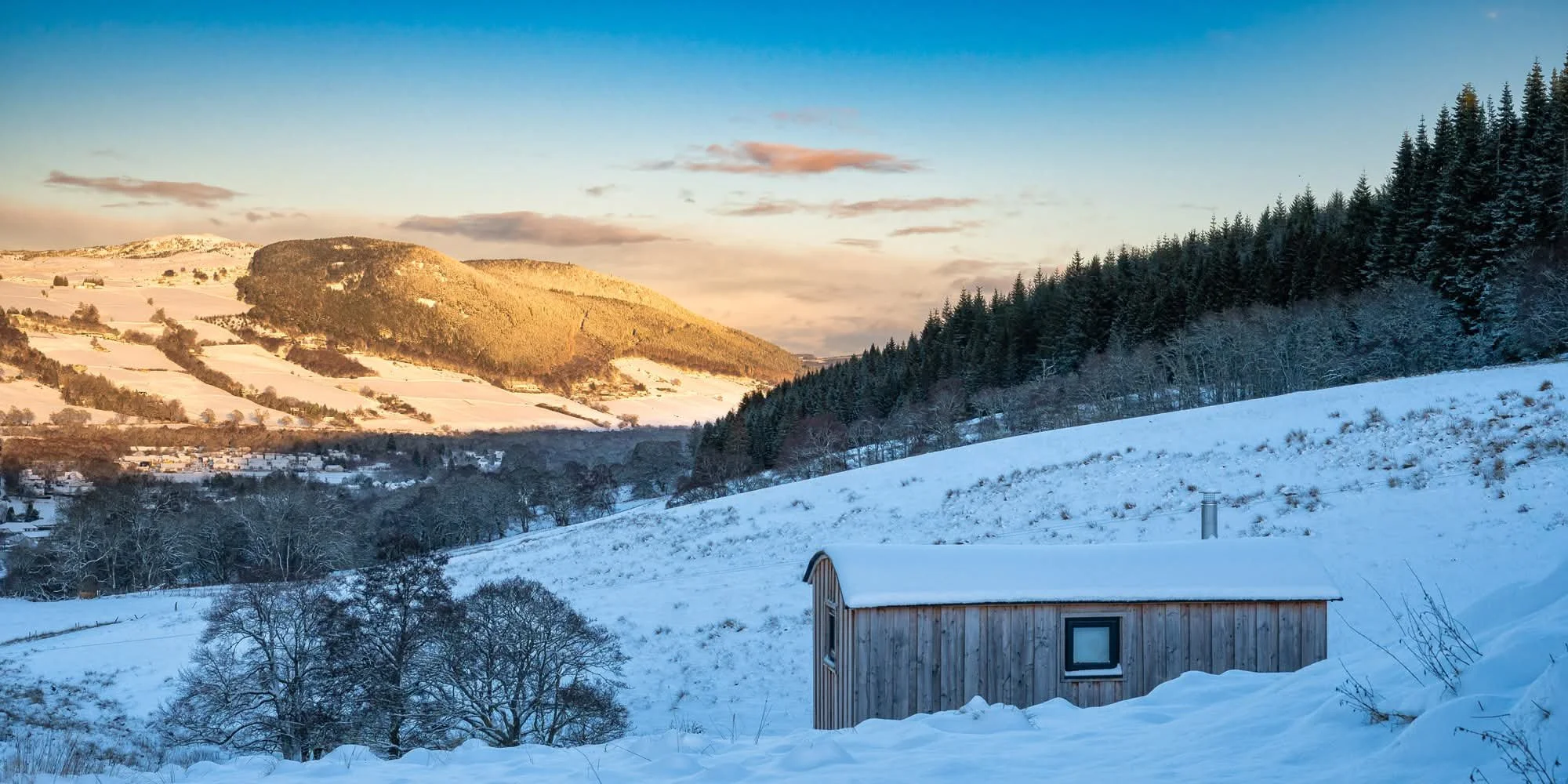
An artists studio hut nestled high up in a glen near Loch Ness.
Shepherd’s Hut Planning Permission: Frequently Asked Questions
Do I need planning permission for a shepherd’s hut in my garden?
Not necessarily. Depending on the circumstances, a shepherd’s hut within the domestic curtilage of a house may fall within householder permitted development rights if it is being used for purposes incidental to enjoyment of the dwellinghouse. There are limits and conditions, so it's important to check the specific circumstances.
Do I need planning permission for a shepherd’s hut holiday let?
Planning permission is much more likely to be required where a shepherd’s hut is being installed specifically as holiday accommodation, visitor accommodation or a short-term let. The planning authority may consider both the hut and the use of the land.
Does a shepherd’s hut on wheels need planning permission?
Being on wheels does not automatically mean a shepherd’s hut is exempt from planning control. The use of the hut, its location and the use of the land can all be relevant.
Can I put a shepherd’s hut on agricultural land?
It depends on what you intend to do with it. A shepherd’s hut used for tourism or accommodation can involve a change in the use of the land, meaning planning permission may be required.
Can I use a shepherd’s hut as a home office?
Potentially. A shepherd’s hut within the garden or domestic curtilage of your home may be able to benefit from permitted development rights when used for purposes incidental to the enjoyment of the dwellinghouse, subject to the relevant limits and conditions.
Can I use a shepherd’s hut as guest accommodation?
Occasional use by family and guests can be different from creating a separate dwelling. If your hut includes sleeping accommodation or self-contained facilities, it's worth checking the intended use with your local planning authority.
Can I live permanently in a shepherd’s hut?
Permanent residential use is different from occasional recreational accommodation and may require planning permission, depending on the circumstances and the land involved.
Do off-grid shepherd’s huts need planning permission?
Being off-grid does not automatically remove the need for planning permission. However, a low-impact, removable hut with minimal permanent infrastructure may form part of a sensitively designed rural development proposal.
Our advice? Ask early.
We're always happy to chat about your plans, but we are shepherd’s hut builders, not planning consultants.
We can tell you what we've seen work on previous projects, provide dimensions, elevations, layouts, material specifications and other information needed for an application, but we can't tell you definitively whether your particular site requires planning permission or guarantee that permission will be granted.
That's a job for your local planning authority or a qualified planning professional.
If you're considering a shepherd’s hut in Scotland, it may simply be a case of contacting the council, explaining where it's going and exactly what you intend to use it for, and asking whether permission is required. If you'd like greater certainty, ask them about the appropriate formal process for confirming that the proposed siting and use is lawful. Highland Council, for example, provides a development enquiry route and guidance for people who are unsure whether planning permission is required.
And if the answer comes back:
“Yes, you'll need planning permission.”
Don't panic.
For a sympathetic, carefully considered shepherd’s hut, particularly one supporting sustainable, small-scale rural tourism, planning can simply be the first step towards getting a great idea off the ground!
Please note: We're shepherd’s hut builders, not planning consultants, and this article is intended as general information based on our experience rather than professional planning or legal advice. Planning requirements vary depending on the site, intended use, local planning policy and individual circumstances, and regulations can change. Always check your particular proposal with your local planning authority or a suitably qualified planning professional before proceeding.